



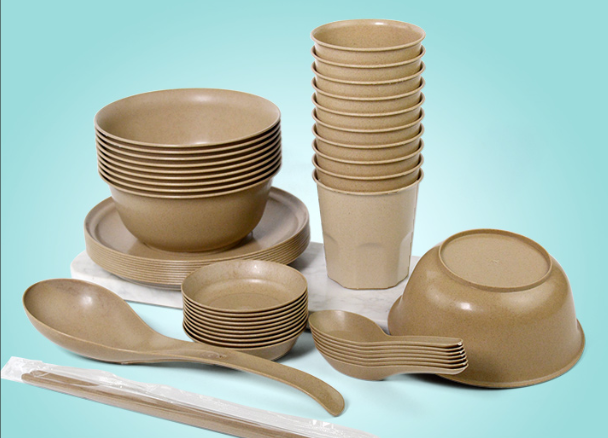
As critical supplies in direct contact with food, the quality and safety of disposable tableware are directly related to consumers’ health and enterprises’ market reputation. Factory Inspection (FRI) is a core link to control product quality and verify production compliance before shipment, which can effectively identify potential risks in the production process. Combining food contact product safety standards and years of on-site inspection experience, the following checklist of key points for FRI of disposable tableware is compiled to provide practical reference for importers, purchasers and industry practitioners.
I. Quantity and Packaging Inspection
- Quantity Verification: Check whether the actual production/inspection quantity, model and color are consistent with the PO quantity.
- Outer Carton Inspection: Inspect whether the outer carton is firm, dry and free of damage; verify that the shipping marks on the outer carton are clear, correct and meet customer requirements.
- Inner Packaging Inspection: Examine whether the inner packaging (such as PE bags, shrink film) is tightly sealed and free of damage or air leakage to ensure the hygiene and safety of products during transportation and storage.
- Foreign Objects in Packaging: Randomly open the inner packaging to check for foreign objects such as insects, hair, oil stains and dust.
II. Appearance and Hygiene Inspection
Inspectors shall sample according to AQL standards to determine the appearance defects and hygiene status of disposable tableware.
- Sensory Requirements: Check whether the product surface is flat, clean and uniform in texture, without oil stains, dust, mildew and other foreign objects.
- Color and Odor: Verify that the product color is uniform without obvious discoloration or fading; smell the product to check for abnormal odors (such as plastic burning smell, ink smell, solvent residue smell).
- Integrity: Inspect for structural defects such as scratches, wrinkles, peeling, cracks and perforations.
- Molding Defects: Check for burrs, flash, bubbles, mold defects (such as material shortage, deformation) and so on.
- Printing/Patterns: Ensure that the printed patterns are clear without double images or ink peeling, and the printing ink shall not be in direct contact with food.
III. Functionality and Dimensional Inspection
This part checks whether the basic use functions and dimensions of the tableware meet the requirements.
- Dimensional Verification: Use calipers or measuring tools to measure key dimensions of the tableware such as length, width, height and capacity, and verify compliance with the specification sheet.
- Strength/Stiffness (for cups/bowls): At room temperature, conduct a load-bearing test on cups/bowls (e.g., load 3kg, deformation rate shall not exceed 5% after 1 minute) to check if they are prone to deformation or collapse.
- Temperature Resistance (for tableware used with hot drinks/hot food): Simulate usage scenarios by pouring hot water (e.g., 80℃) to check if the tableware deforms, leaks or releases abnormal odors.
- Functionality of Knives/Forks (for knives/forks): Inspect whether the knife edge is flat without gaps; check if the fork tines are smooth without burrs and have sufficient strength to avoid easy breakage.
- Sealability (for covered food containers): Verify that the lid fits tightly with the container, providing good sealability and preventing leakage.
IV. Labeling and Document Inspection
- Food Contact Label: Check whether the product or packaging is clearly marked with “For Food Contact” or similar terms.
- Material Label: Inspect whether the product or packaging indicates the material type (such as PP, PE, PS, PET, etc.) which is consistent with the actual material.
- Product Information Label: Verify the presence of manufacturer name/address, product name, implementation standard, production date/batch number.
- Usage Instructions: Check for correct usage methods and precautions (such as microwave applicability, temperature resistance range).
- Qualification Certificate: Inspect whether a certificate of conformity or test report is attached.
Summary
Hygiene and safety are the top priorities in the on-site inspection of disposable tableware. During inspection, strict attention should be paid to the sensory requirements, abnormal odors and inner packaging sealability of products to ensure that they meet all hygiene requirements for food contact materials before leaving the factory.
Post time: Dec-23-2025