



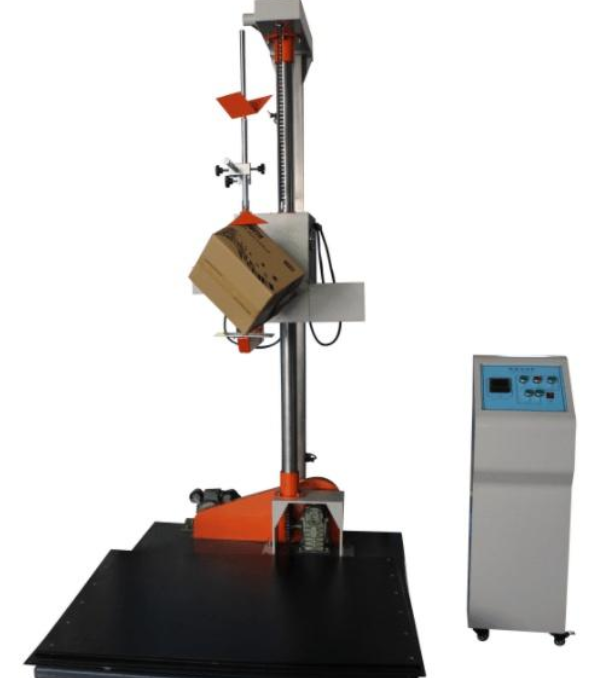
Product packaging and transportation testing is a core compliance step in ensuring that products are protected from physical damage and environmental impacts throughout the entire storage, handling, and transportation process. Requirements must be formulated based on target market regulations, transportation scenarios (e.g., e-commerce, cross-border, industrial logistics), and product characteristics (e.g., fragile goods, dangerous goods, precision instruments). The following is a detailed breakdown of the specific requirements for packaging and transportation testing from the perspective of mandatory regulatory requirements and core test items:
I. Mandatory requirements of core international and regional regulations
Different countries/regions have clear legal bottom lines for the compliance of packaging and transportation.
Products that do not meet the standards will face customs clearance obstacles and market recall risks. The core regulations are as follows:
1. EU: “Packaging and Packaging Waste Regulation” (PPWR, implemented in June 2025)
(1) Packaging recyclability: must pass the “material separability test”, such as plastic and paper packaging must be manually separable (separation time ≤ 30 seconds/piece);
(2) Recycled material ratio: from 2025, paper packaging ≥ 45%, plastic packaging ≥ 35%, metal packaging ≥ 30%, and a third-party testing material composition report must be provided;
(3) Carbon footprint: Cross-border transportation packaging must submit an ISO 14067 carbon accounting report, and the carbon emission limit varies depending on the product type (e.g. electronic product packaging ≤ 5kg CO₂e/ );
(4) Prohibited substances: The total amount of heavy metals (lead, cadmium, mercury, hexavalent chromium) in packaging must be ≤100mg/kg.
2. United States: FDA “Food Contact Packaging Safety Standard” (21 CFR Part 174) / CPSIA “Consumer Product Safety Improvement Act”
(1) Food contact packaging: must pass the “migration test” (e.g., the migration of phthalates in plastic packaging must be ≤0.1%);
(2) Children’s product packaging: must pass the “anti-suffocation test” (small parts packaging opening ≤38mm to prevent children from accidentally ingesting);
(3) Transportation safety: Dangerous goods packaging must comply with DOT (Department of Transportation) standards, such as lithium battery packaging must pass the “1.2-meter drop test + 5-minute stacking test”.
3. China: GB/T 4857 “Basic Tests for Transport Packages” / GB 23350 “Requirements for Restricting Excessive Packaging of Goods”
(1) Excessive packaging restrictions: Food/cosmetic packaging void ratio ≤ 45%, number of packaging layers ≤ 3 (mandatory in 2025);
(2) Environmental protection requirements: Non-degradable plastic packaging must be marked with a “recyclable logo” and have a thickness of ≥ 0.025mm;
(3) Mechanical properties: E-commerce packaging must pass the “3-time 1.0-meter drop test” with a breakage rate ≤ 0%.
4. Southeast Asia (Thailand/Malaysia): TISI 1881 (Thailand), SIRIM MS 1334 (Malaysia)
(1) Tropical Environment Adaptation: Packaging must pass the “40°C/90% RH 72-hour temperature and humidity cycle test” to prevent packaging from mildew in high humidity environments;
(2) Transport Vibration: Land transport packaging must simulate the bumpy road conditions in Southeast Asia and pass the “10-50Hz sinusoidal vibration test (lasting 2 hours)” with internal product displacement ≤5mm.
II. Core test items for packaging and transportation
1. Environmental pre-treatment test (simulating temperature and humidity changes during transportation)
Aimed to verify the stability of packaging under extreme temperature and humidity (such as low temperatures in northern winter and high humidity in Southeast Asian shipping)
(1) Low temperature test
(2) High temperature test
(3) Temperature cycle test
2. Mechanical performance test (simulating physical impact during handling and transportation)
This is the most core part of packaging testing and directly determines whether the product will be damaged during logistics. The key items are as follows:
(1) Free drop test
(2) Vibration test
(3) Compression/stacking test
(4) Impact test
(5) Clamping test
3. Special scenario test (for specific products/transportation methods)
(1) Waterproof test: for outdoor products or shipping packaging
(2) Tip-over test: for large equipment (such as washing machines, refrigerators)
(3) Cushioning material test: for fragile items (such as glass, ceramics)
(4) Low pressure test: for precision instruments for air transportation
Post time: Sep-04-2025