



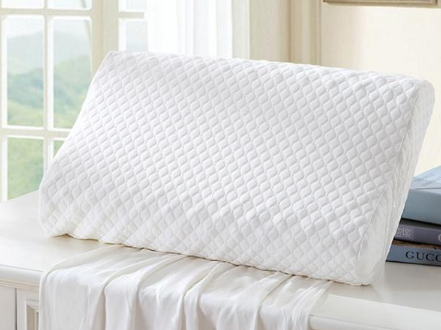
As people’s emphasis on healthy sleep continues to grow, pillows, as essential daily bedding items, directly impact cervical spine health and allergy risks.
According to the latest report from the U.S. Consumer Product Safety Commission (CPSC), complaints related to pillows increased by 10% in the past year, primarily involving filler allergies and fire hazards.
TTS, as a professional third-party inspection company, has launched a key points guide for pillow safety inspection based on ASTM D4770, OEKO-TEX Standard 100, and CPSC standards, to help manufacturers optimize their products and enable consumers to purchase with confidence.
1. Material Safety
Inspect filling materials: such as feathers, memory foam, or latex.
Detect harmful substance content: including volatile organic compounds (VOCs), formaldehyde, and heavy metals, ensuring compliance with CPSIA requirements to avoid skin irritation or respiratory issues.
Inspect textile fabrics: free of harmful dyes, with pH values between 4.0-7.5, to prevent allergens.
2. Fire Resistance and Flammability Performance
Pillow flammability test: Simulate cigarette ignition scenarios to ensure fillings do not burn rapidly.
Memory foam pillows require additional evaluation of heat release rate, complying with TB 117-2013 fire standards.
3. Hygiene and Antibacterial Design
Inspect dust mite resistance and antibacterial performance: Test bacterial inhibition rate >99% according to ASTM E2149.
Fillings must undergo mold and bacterial growth tests to ensure no pathogen breeding in humid environments.
Check breathability of waterproof outer materials to prevent sweat accumulation leading to odors or mildew.
4. Structural Durability and Ergonomics
Durability assessment includes compression resilience testing (ASTM D3574), confirming a shape recovery rate >90% after 5,000 uses.
Cervical support design must conform to ergonomics, measuring height and firmness to avoid causing neck pain.
Washing tests ensure fabrics do not fade or deform, with labels indicating cleaning temperatures <60°C.
5. Labeling and Instruction Requirements
Warning labels must be permanently affixed, including allergy warnings (e.g., “Contains feathers, may cause allergies”) and usage restrictions.
Instructions should detail filling type, size (standard such as 50x70cm), and care methods, supporting multiple languages.
Products should bear certification marks, such as OEKO-TEX or CPSC compliance.
CPSC data shows that material allergies account for over 70% of complaints. Choosing certified pillows can effectively avoid risks.
We call on the industry to focus on sustainable materials and provide customized inspection solutions for manufacturers to drive the pillow market toward health and environmental development.
For detailed reports or consultations, please visit our website or contact our inspection hotline. Quality sleep starts with professional inspection!
Post time: Jan-06-2026