



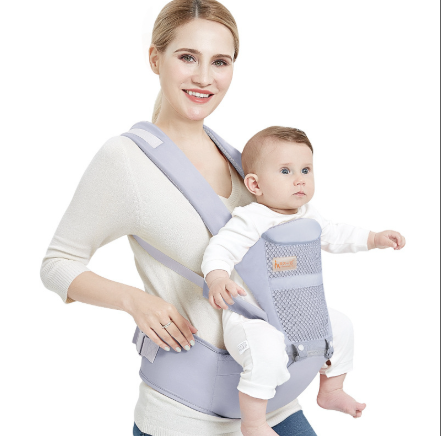
As an everyday childcare tool, the design and quality of baby carriers directly affect a baby’s healthy development and potential risk prevention.
According to the U.S. Consumer Product Safety Commission (CPSC) and international standards such as ASTM F2236,
the inspection of baby carriers must strictly adhere to relevant safety regulations. As a third-party inspection company,
we are committed to providing professional inspection services to manufacturers and consumers.
Below, we share key inspection points for baby carriers (including soft carriers and slings) to help you better understand product safety standards.
1. Material Safety Inspection
• Hazardous Substance Testing: Check whether the carrier material contains harmful chemicals, such as heavy metals (lead, cadmium), phthalates, etc., to ensure compliance with the CPSC’s Child Product Safety Requirements (CPSIA). The material should be non-toxic and odorless to avoid irritating the baby’s skin.
• Flammability Testing: Test the flammability of the fabric and filling materials according to 16 CFR 1610 to ensure that they do not burn rapidly in a fire. The filling material must meet the fire resistance requirements of 16 CFR 1500.3(c)(6)(vi).
• Durability Assessment: The material must undergo washing, abrasion, and aging tests to ensure it does not fade or deform after long-term use.
2. Structural and Load Testing
• Load Capacity: According to ASTM F2236, the carrier must withstand at least three times the manufacturer’s recommended maximum weight (e.g., the baby’s maximum weight limit). Dynamic load testing simulates real-world usage scenarios to ensure the carrier does not break under shaking or impact.
• Buckle and Connector Strength: Test the tensile strength and fatigue resistance of buckles, straps, and adjusters. Buckles should be easy to operate but not prone to accidental loosening to prevent the baby from slipping.
• Support Structure: Check the carrier’s support design for the baby’s head, neck, and spine to ensure ergonomics and avoid the risk of suffocation or improper posture. For sling-type carriers (ASTM F2907), additional testing of wrap tightness and ventilation is required.
3. Design and Functional Testing
• Size and Adjustability: The baby carrier should fit users of different body types, ensuring that the shoulder straps, waist belt, and leg openings are adjustable. Verify that it provides sufficient leg support to prevent hip dysplasia (a risk factor for hip dysplasia).
• Ventilation and Comfort: The material must be breathable to prevent the baby from overheating. Test for pressure marks or discomfort during use.
• Accessory Safety: If accessories such as hoods or bibs are included, verify their secure fastening and potential strangulation risks.
4. Labeling and Instruction Requirements
• Warning Labels: Must contain clear warning information, such as “Do not use with baby facing outwards” and “Check fasteners regularly.” Labels must be permanently attached and washable.
• Instructions for Use: Provide detailed usage guidelines, age/weight restrictions, and cleaning methods. Manufacturers must ensure that the instructions are multilingual for easy consumer understanding.
• Certification Marks: The product should indicate compliance with ASTM or CPSC standards and include a third-party inspection report number.
5. Overall Performance and Simulation Testing
• Drop and Impact Testing: Simulates accidental drop scenarios to ensure the carrier remains intact under impact.
• Periodic Testing: According to CPSC regulations, manufacturers must conduct third-party laboratory testing at least once a year to monitor batch consistency.
• Special Type Inspections: For frame-type carriers (ASTM F2549), additional checks are performed on the corrosion resistance and stability of the metal frame; for toy accessories, compliance with ASTM F963 toy safety standards is required.
Safety hazards in baby carriers often stem from design flaws or material issues. According to CPSC reports, many accidents in recent years have been related to fastener failure or improper use. Choosing products certified by third-party testing significantly reduces risk.
As a professional third-party inspection company, we provide comprehensive baby carrier inspection services, covering the entire supply chain from raw materials to finished products.
If you are a manufacturer or buyer, please contact us for customized inspection solutions to ensure your products are compliant with market regulations. Safe parenting starts with testing!
Post time: Dec-25-2025