



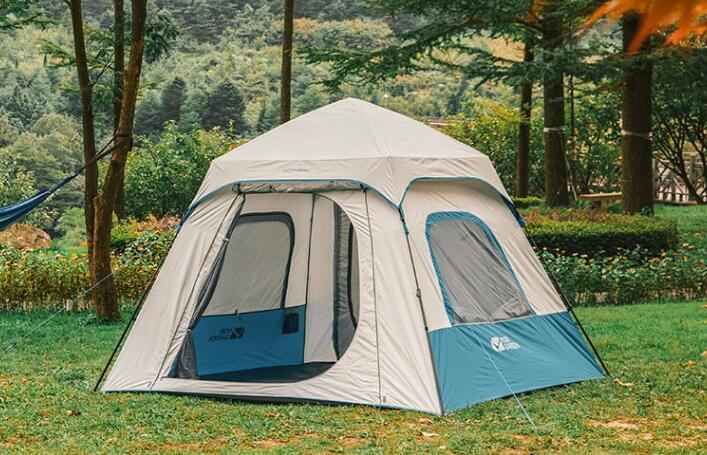
The quality inspection of outdoor tents is a core process to ensure user safety, meet product performance standards, and enhance user experience.
Its essence is to address the challenges of complex and changeable outdoor environments, and prevent safety accidents or functional failures caused by product defects.
In outdoor scenarios (such as camping, hiking, and mountaineering), tents must withstand multiple tests including wind, rain, sunlight, low temperatures, and wear.
Quality inspection is designed to meet these needs, establishing a protection system from three dimensions: safety, durability, and functionality.
The core standards, key points, and standardized processes for outdoor tent inspection are organized as follows:
I. Focus on Five Core Inspection Dimensions to Precisely Control Product Quality
(1) Appearance Inspection: Judge Craftsmanship from Details
Appearance is the first impression a product gives to customers and a direct reflection of craftsmanship quality.
Inspection shall be conducted under normal lighting conditions (40W fluorescent lamp, 1m away from the sample), with key focuses on:
- Fabric and Stitching: No holes, snags, or obvious stains; color difference of products in the same batch ≤ Grade 3; no skipped stitches or missed stitches in stitching; stitch density controlled at 6-8 stitches per 10cm; no bubbles, wrinkles, or peeling on seam tape.
- Accessory Quality: No bending or cracks on tent poles; no rust or burrs on tent pegs; no fraying or loose joints on guy lines; fasteners (buckle clips, adjustment buckles) open and close smoothly without jamming or breakage.
- Label Specification: Product labels shall clearly indicate brand, model, specification, implementation standards, and production date to ensure complete and traceable information.
(2) Dimension Inspection: Ensure Compliance of Actual Usage Space
Dimension deviation directly affects user experience. A tape measure with an accuracy of 1mm shall be used to measure key dimensions, with an allowable deviation ≤ ±3% (in compliance with QB/T 4463-2013):
- Inner Tent: Length, width, height (vertical distance from the ground to the top of the inner tent);
- Outer Tent: Length and width when unfolded, skirt height (≥15cm to prevent rainwater infiltration);
- Accessories: Tent peg length ≥20cm; guy line length ≥3m per piece; deviation between the unfolded length of tent poles and the marked length ≤2cm.
(3) Material Inspection: Lay a Solid Foundation for Durability from the Source
Materials are the core guarantee for the service life of tents. The laboratory is equipped with professional equipment to conduct physical performance tests on core materials:
- Outer tent: Gram weight and tear resistance of the fabric;
- Tent floor material: Thickness and abrasion resistance;
- Stitching: Breaking strength;
- Zipper: Durability.
(4) Function Inspection: Address Core Outdoor Needs
The core value of outdoor tents lies in “waterproofness, breathability, wind resistance, and UV resistance”. Tests shall be conducted by simulating actual scenarios:
- Waterproofness: The hydrostatic head of the outer tent fabric ≥2000mmH₂O (moderate rain level), and ≥3000mmH₂O for alpine tents (heavy rain level); hydrostatic head at seams ≥1500mmH₂O; after 30 minutes of spray test (rainfall volume: 50L/㎡·h) after setup, no water seepage in the inner tent.
- Breathability: Breathability rate of the outer tent ≥5mm/s, and ≥10mm/s for the inner tent (to avoid stuffiness); for alpine tents, the smooth opening and closing of ventilation windows shall be checked additionally.
- Wind Resistance: Wind speed simulated in a wind tunnel laboratory; no deformation at wind speed ≤8m/s, no collapse at wind speed ≤12m/s (strong wind); alpine tents shall withstand wind speed ≥15m/s.
- UV Resistance: UPF (Ultraviolet Protection Factor) ≥50+, UV transmittance ≤2% to prevent fabric aging and harm to users.
(5) Structure Inspection: Ensure Convenient and Safe Setup
- Ease of Setup: A single person can complete setup within 10 minutes; no missing accessories; clear and easy-to-understand setup instructions.
- Load-Bearing Stability: Apply a static load of 50kg (simulating snow accumulation) on the top of the tent for 30 minutes; no bending of poles or tearing of fabric.
- Accessory Strength: Pull-out force of metal tent pegs ≥1500N, pull-out force of plastic tent pegs ≥800N; breaking strength of guy lines ≥200N.
II. Implement Standardized Inspection Processes to Ensure Objective and Traceable Results
The TTS Quality Inspection Team strictly follows the five-step process of “Sampling → Initial Inspection → Performance Testing → Judgment → Reporting” to ensure that each inspection is standardized and controllable:
- Sampling Stage: Randomly select samples in accordance with the sampling standards of MIL-STD-105E.
- Initial Inspection Stage: Unpack and verify the completeness of accessories, and conduct appearance and dimension inspections. If there are “critical defects” (such as fabric holes or broken poles), the sample shall be directly determined as unqualified.
- Performance Testing Stage: Conduct tests in the order of “Material → Function → Structure” (to avoid sample damage from previous tests); the laboratory records data throughout the process to ensure reproducibility.
- Qualification Judgment Stage: A sample is qualified if there are no critical defects and the number of minor defects ≤ AQL (Acceptable Quality Level) limits.
- Report Output Stage: Inspection reports shall include product information, inspection basis, test data, and judgment conclusions.
In addition, for children’s tents, the safety of accessories shall be checked additionally (no sharp burrs, prevention of small parts falling off); for export products, alignment with target market standards (such as flame retardant requirements in Europe and the United States) shall be done in advance to ensure that products of all categories meet quality standards in all scenarios.
By implementing the aforementioned inspection standards and processes, we can meet customer needs with reliable quality and enhance market competitiveness.
Post time: Sep-16-2025